
Mt. Kenya: The Mountain Of Mystery
In his Mashujaa Day speech delivered in Kirinyaga County in October 2021, President Uhuru Kenyatta introduced a new phrase in the Kenyan political lexicon, The Mountain of Mystery, in reference to Mt Kenya. This essay is an explication of this phrase with special reference to Kenyan politics.
In an old colonial map drawn up around the time Kenya was declared a British Protectorate in 1895, long before the present boundaries were firmed up, the region known as Kenya is shown as a small territory in the middle of the chart.
Its neighbours were Ukamba, Northern Frontier, Jubaland, Tanaland, and Naivasha. Yet it is this tiny area around Mt Kenya, the mountain that donated its name to the modern Kenyan state, that was to become the nerve center of Kenyan politics.
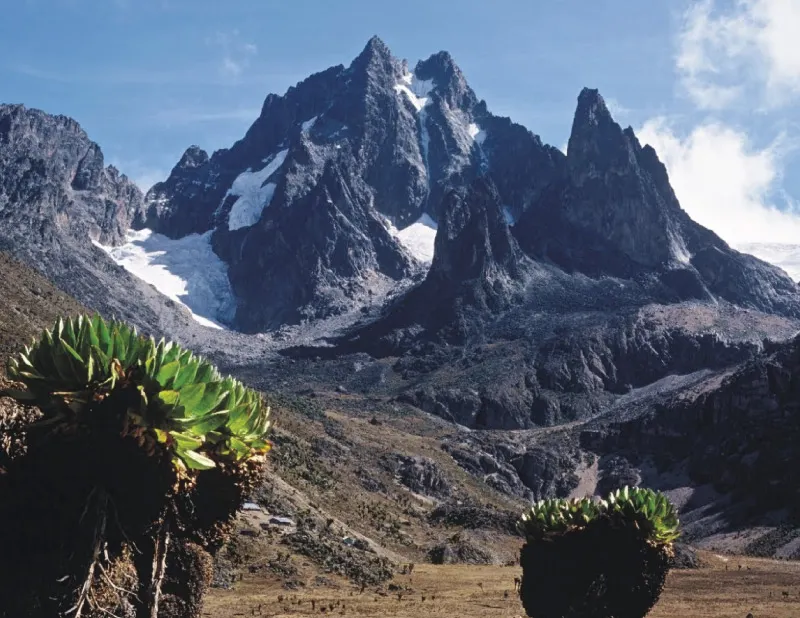
The Kenya of that time comprised of the land adjacent to the great mountain that the Kamba chief, Kivoi wa Mwendwa, had pointed out to a missionary as the Kiinyaa, as the Kamba pronounced Kiri Nyaga, or the mountain with an inexplicable white patch, similar to the white feathers of an ostrich. The Gikuyu people who lived near the mountain named it in association with the nyaga, a word that has several meanings, all of which have a bearing on the mountain.
One meaning is the ostrich, which is known as Nyaga, because it has a Runyaga, or white patch. The second meaning is derived from the Gikuyu word for the spangled look of the mountain, with nyaga here meaning the splotchy look of the mountain’s skin. The third and most effective and purposeful meaning is the crest of leadership, worn by athamaki (senior elders) long before their overthrow, in Kikuyu mythology, by the Ndemi generation, the nyaga which crest had a plume of ostrich feathers.
The last meaning is the one closely associated with the Gikuyu name for God, Mwene Nyaga, meaning the owner of leadership, or better still, he that bestows leadership or blessings in the global sense.
Thus, Kirinyaga could also mean the mountain that wears the crest of leadership. Here, the mountain is at the head of three other mountain ranges that ring the land of the Agikuyu; the Aberdares (Kia Nyandarua), Ngong ranges (Kia Mbiruiru), and the Ol Donyo Sabuk (Kia Njahi) or Kianzavi as the Kamba call it. This mountain is also called Kirimambogo, the mountain of buffalos.
All these mountains are named after their most dominant and unique characteristic — how it looks, the most common wildlife around it, and so on. The naming of the mountain after its description is hardly surprising; linguistic geographers explain that typonyms, proper names given to geographical features, tend to be descriptive.
The description of Mt. Kenya, however, does allude to something else, what President Uhuru Kenyatta described in his Mushujaa Day speech as the “Mountain of Mystery.” In his speech, the president connected the mysterious nature of Mt. Kenya to both the Christian God and the Agikuyu God, Mwene Nyaga, roughly translatable into the “owner of the crest of leadership.”
“According to traditional folklore, the Mountain of Mystery was created as God’s resting place and as a Sign of His Wonder. After God created the Earth, this is where He is said to have rested on the seventh day to admire his workmanship. This mountain, standing tall in our presence here today, was not just a place of rest and a shrine for worship. It was also a place of renewal, a place of honest conversation, and a place for bonding and reconciliation,” the president said.
The Mountain of God
The people living around the mountain related to it with both awe and admiration. Their God sat here, high up, from where he, as the Mugai (the giver) apportioned his blessings to each as per his will and depending on prayers. It was therefore the Mountain of God, not unlike Mount Horeb, the Biblical mountain where Moses first met God who thencommanded him to go back to Egypt and free the Israelites. As the story goes, Moses, who considered himself a poor public speaker, was assisted in the task by his brother Aaron, who had a gift of the gab. After the ten plagues, Moses and his brother led the Israelites into the desert, to Mount Sinai, another Mountain of God and therefore a mountain of mystery.
After visiting the mountain of mystery and communing with God, Moses came back heaving the tablets containing the Ten Commandments only to find that an impatient Aaron had used his rhetorical skills and mobilized the people to build a golden calf after smelting their ornamental precious metals. Petrified by the shallow conviction of his people and the conmanship of his brother, an angry Moses broke the commandment. However, the mountain of mystery had a spare copy. The uncanny resemblance between that biblical moment and the political situation in Mt Kenya region in the run up to the August 2022 general election in Kenya was markedly visible.
Murungu, had once spoken to the first ancestors, Gikuyu and his wife Mumbi, and given them dominion over a large, abundant territory between the permanent beacons of mountains and mountain ranges. Here, according to Brittain and Ripley in their A Simple History of East Africa,“the Kikuyu lived in the forests.”
Myths of Origin
According to one of their myths of ethnogenesis, an early ancestor by the name Mumbere had three sons called Masai, Kamba and Gikuyu. This name Mumbere, is really a portmanteau, for it blends the first (Mbere) and the creator (Mumbi). The Mbeere people, closely related to the Gikuyu, still retain the name. According to Prof Kitheka wa Mberia, an analysis of linguistic data suggests that the Mbeere/Chuka/Tharaka speakers may be the linguistic progenitors of the Pan-Thagicu language cluster, of which the Gikuyu is a part.
Mumbere asked each of his sons to choose from a spear, a bow and a digging stick. Masai chose the spear, Kamba the bow and Gikuyu the digging stick (muro). In this myth, the Embu, and the various communities that make the Ameru people, are all included in the Gikuyu, for it is inconceivable that the creators of the myth would be aware of the existence of the Kamba and the Maasai and be oblivious of such close neighbours and kin of the Gikuyu. That the myths elides the difference between the Gikuyu, the Embu and the Meru and treats them as one and the same bespeaks volumes about their consanguinity and exraordinarily close kinship.
The digging stick is a mysterious instrument. On the face of it, it gives little about its intended use. It is not a weapon, although you may defend yourself with it, albeit with major disadvantages. Perhaps because of selecting this stick, the Gikuyu are largely a peaceful people who will only fight as a last resort.
The proper use for the digging stick is as a farming implement. But to put it to good use carried a mystery of its own. You used it to plant seeds that then germinated mysteriously. And that was not all. The newly germinated plants were hardly food. You waited patiently for the crop to reach maturity, which came as mysteriously as the germination. Wealth, therefore, was not something you stole from others; it was always something you nurtured.
The Gikuyu also have another myth of origin that states that they are descendants of Gikuyu and Mumbi, the Adam and Eve of the tribe. They had ten daughters, described as “nine full daughters,” meaning ten daughters, as it was sacrilegious to count Gikuyu people. When they attained marriageable age, Gikuyu prayed for men to Mwene Nyaga as suitors for their nine grown daughters.
Mwene Nyaga instructed Gikuyu to get nine rods, each corresponding to the height of each girl, perhaps glorifying the diverse genetic pool of the Kikuyu. He was then directed to light a sacrificial fire and place the nine rods on it, and to pray facing the mountain of mystery. From the sacrificial fire emerged nine men (sons of fire so to speak, not unlike the sons of the Sun in the Egyptian pharaonic myths of origin), each designed for a particular daughter. Thus the daughters became the progenitors of the nine Gikuyu clans.
The last-born daughter, called Wamuyu, never got herself a husband as she was too young to hitch up and was left to live in her father’s homestead and inherited his wealth. That is why among the Gikuyu, matrimony is not forced on women and those that remain unmarried are entitled to their father’s wealth as their inheritance. The Kikuyu myth of origin therefore anticipated the phenomenon of single-motherhood, although it certainly does not valorize it. There is another myth, however, that claims that the last of the Gikuyu daughters was married by a Kamba man and that is the reason why the Kikuyu and the Kamba call each other, athoni, or in-law.
The mountain of mystery beyond religion
However, the connection with the Mountain goes beyond religious, economic and spiritual aspects. There is an obvious political connection to the Mountain of Mystery. Mutahi Ngunyi’s political maxim that “you cannot buy a Kikuyu but you can rent one” is an expression of this impenetrable mystery.
The people around the mountain are astute practitioners of an opaque and mysterious politics. They only make their political decisions at the last minute (their proverb says Mugikuyu ateng’eraga guatuka, or a proper Kikuyu starts running when darkness approaches), long after the ateti (politicians) have politicked and the athamaki (leaders) have taken over. For Gikuyu leadership is hardly titular, nor pyramidal; it is acephalous, dispersed, organic, consultative and referential to elder-priests, even in their modern, seemingly confused display of disorganisation.
Some analysts now claim that modern, supposedly “trans-tribal” Gikuyu youth have transcended this categorization but there are no electoral results to support the claim. However, the results of the August 2022 general election once again confirmed that the Kikuyu voted overwhelmingly for one side of politics; with the majority of those who were saying hatupangwingwi (this term means “those who don’t listen to assumed political masters”) having been long pangwad (willingly arranged politically) by their elders, whoever they conceived them to be. It is this outcome that explains the community’s revelling in the fact that the Kenya Kwanza government was “their” government.
A peaceful, assimilative community
When the colonial occupiers arrived in the Mt Kenya region, the Gikuyu welcomed them with both hands. In hindsight, this looks like stupidity itself. However, the decision was most likely informed initially by the Gikuyu moral economy and later by strategies of survival.
The Gikuyu, since the mysterious appearance of the sons who married Gikuyu’s daughters, had always welcomed strangers amongst them. These strangers were killed softly with love so much that they stayed and got assimilated and became Gikuyu. The Gikuyu did not kill strangers on sight. They welcomed such visitors; as their proverb says, Mugeni ni rui, a visitor is like a flowing river. Everyone was considered innocent and a potential Gikuyu and could indeed be born again into the community.
This explains why Kikuyus are increasingly supporting non-Kikuyu leaders; everyone is considered worthy and equal to the Kikuyu until they prove otherwise — and then all hell breaks loose. Twice now, during the Kenyatta succession as well as recently in the Uhuru succession, the Kikuyu assisted non-Kikuyus to takeover the presidency, in total conviction that the ascending non-Kikuyu leaders were innocent, well-meaning and deserving, Kikyus-in-the-making, ready to be born-again into the community. Only the subsequent conduct of leaders so trusted can change the conviction of the community — as happened with Daniel arap Moi who was perceived as having betrayed the community.
Actually, the Gikuyu people had a rite to facilitate assimilation of foreigners. Known as the Guciarwo na mburi, it involved the enactment of birth by making a sponsor of a foreigner naturalizing as a Gikuyu to hang a piece of goat intestine from a ceremonial goat slaughtered for the purpose around the foreigner’s neck as a symbol of the umbilical cord. The cord was then cut, symbolizing the welcoming of the foreigner into the community. After this ceremony, the foreigner was a foreigner no more and assumed the clan of his sponsor. He became a Mugikuyu, a Gikuyu man.
The second reason why the colonialists may have been welcomed was related initially to mercy and later to a strategy of predator satiation. The Gikuyu of the time, on meeting the white strangers, assumed them to be poor, homeless and in need of shelter, and most likely ill. That is why they looked all pale and malnourished. They wanted land? There was plenty of it, and in any case, they would have to clear it like every Gikuyu Muhoi, poor man, was expected to do. No big deal.
When it dawned on the community that these foreigners were lethal and had come to stay, they were, after initial resistance, allowed access to land for no one thought that land could ever be scarce. It was assumed that they would take the land they wanted, marry a few girls from the community, and everyone would live happily ever after. They knew this to be true from past assimilations of the Athi, Dorobo, Kamba, Maasai, and even Galla communities. Little did they know that the white people were much more difficult to swallow.
The mountain and the advent of colonizers
But the mystery of the Mountain endured. Although the colonizers succeeded in their mission of taking the land, their dairies are full of their apprehensions about, and predictions of, the eventual revolt of the community whom they considered to be notably intelligent, conspiratorial and unruly. The early colonialists feared that the community would start a war with the newcomers and some even opined that they would not want to witness the brutality of that war.
The war did finally come in the form of Mau Mau. For a decade, the Mountain of Mystery hid and protected the fighters from the bombers and the might of British artillery. And they won, even in defeat, with Kenya becoming independent sooner than the colonialists had planned.
In the postcolony, the mountain folks have animated Kenyan politics in no small measure. They produced the first president, but also his harshest critics, the likes of Bildad Kagia, JM Kariuki, Ngugi wa Thiong’o, Koigi wa Wamwere and others.
Inexplicably, and perhaps strategically, the community, split itself into two unequal halves — just like in the 2022 general election — during the Kenyatta succession, with one section rooting for the then vice-President Danial arap Moi at a time when the other section was agitating for constitutional change in order to prevent Moi from ascending to power. Mystery.
The mountain that Moi couldn’t subdue
Despite Moi’s attempt to subdue them during his 24 year reign, he never succeeded. He ended up trying to appease them by attempting to bequeath leadership to a Gikuyu of his choice only for the community to join other Kenyans in rejecting his choice — the then political greenhorn Uhuru Kenyatta. Needless to say, the people from the Mountain of Mystery had a plan B in Mwai Kibaki and it worked perfectly.
The architects of the 2007–2008 violence probably thought their evil plans of evicting poor people from their farms in the Rift Valley would succeed. It didn’t. Reason: the Mountain of Mystery. Arguably the most individualistic community in Kenya, the people of the Mountain mysteriously came together to face a common threat. Incidentally, there is now a thriving urban center along the Nyeri-Nyahururu highway, called IDP, which is majorly populated by former internally displaced persons. That is resilience.
Less than a year to the 2022 general election and the Uhuru Kenyatta succession, the mountain was promising another serving of its mystery. There was no Kikuyu presidential candidate of note, but the emergence of one could not be ruled out. Meantime, the frontrunners in the race focused on the mountain, with some gleefully proclaiming to have the Mountain all sewn up.
But the old volcanic mountain keeps proving again and again that it is a mountain of mystery. It bears remembering that in Gikuyu cosmology, KiriNyaga (the mountain that bears the crest of leadership), is where MweneNyaga (He that bestows the crest of leadership), sits.
All signs are there that Mt Kenya peoples have not changed, despite what appears to have been a political “revolt” against their elders. What is noteworthy is that the community voted together, which is evidence enough that the more things have changed, the more they have remained the same. The 2022 elections came and people of the mountain emerged from their shops, kiosks, stalls, tea farms, dairy farms, and from any of their myriad preoccupations to vote. An outcome was declared. And it looked like the people of the Mountain of Mystery planned it all along.
It is safe to say that Mt Kenya people plan their politics in retrospect so that it always appears as though the outcome was what they had in mind all along. Now, as they occupy various powerful slots in government, it appears as if they had all along planned to be in government, which is quite discomforting for those who have always wished to split the community politically.
Tomorrow morning, the peaks of the mountain shall rise above the clouds, their glaciers shall continue to feed the streams that radiate in all directions, and the soundtrack of wildlife choruses shall commence and God shall dispense his favours to the people.
Like it has always done, the mystery of the old, majestically scraggy mountain shall endure.0°
That was your last free article this month
Keep reading Viewpoints
Your free articles reset on 1 December. Members read without limits, from KSh 499 a month.
