
New Democratic Control Of Congress Better For Africa
In the strange arithmetic of divided government, the new blue wave check on presidential whim is likely to make America more predictable and may prove more valuable to U.S.-Africa relations than any speech, summit, or slogan.
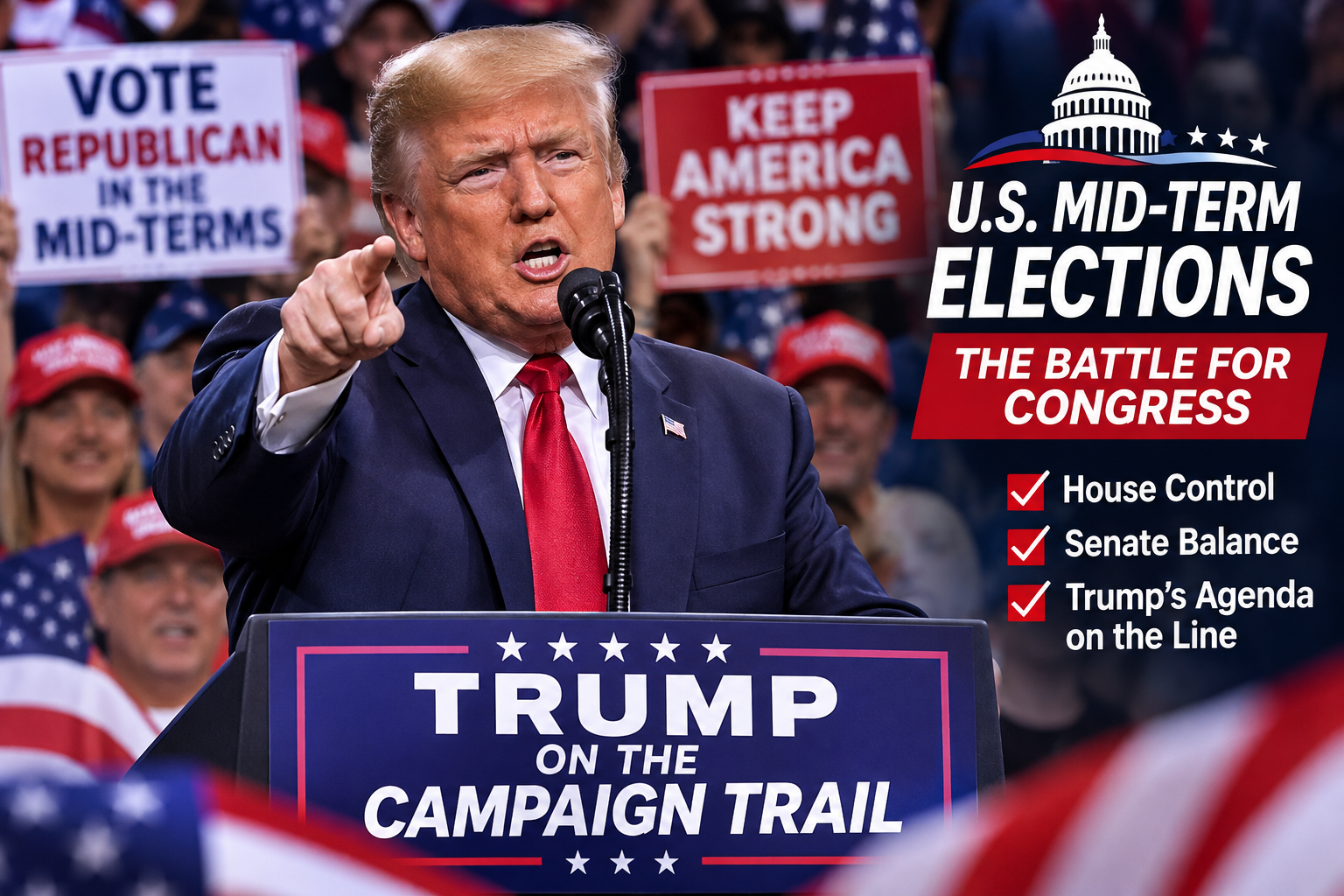
The political shockwaves from the 2026 American midterm elections are reverberating far beyond Capitol Hill, but it is on the African continent that their most consequential, and least examined, geopolitical aftershocks may be felt.
In a decisive electoral rebuke delivered amid public fury over the Iran war, tariff-driven inflation, and the rising cost of living, the Democratic Party captured majorities in both the House of Representatives and the Senate, fracturing the Republican Party’s long-term unified control of Washington .
For President Donald Trump, the loss represents a formidable legislative check on a second-term agenda that had increasingly funneled American engagement with Africa through a narrow, transactional, and often punitive lens. Yet across the continent, from the corridors of the African Union in Addis Ababa to the finance ministries in various African capitals, the shift in congressional power is being viewed through a markedly different prism: not as an American domestic dispute, but as a structural opening to check unilateralism and arbitrariness, restore key trade and development frameworks, and re-anchor U.S.-Africa policy within a rules-based international order.
The case for cautious African optimism rests not on the illusion of Democratic benevolence, but on the hard constitutional mechanics of divided government. While President Trump retains significant authority over diplomacy and executive actions, the power of the purse and the confirmation of key personnel now rest firmly in Democratic hands. As the Council on Foreign Relations has noted, this creates an institutional counterweight that did not exist during the first two years of the second Trump term .
For a continent that had grown accustomed to being an afterthought in Washington’s “America First” calculus—a posture that Gordon K’achola, founder of the Africa Center for Diplomatic Affairs in Kenya, described as having made U.S.-Africa relations “more turbulent”—the return of congressional oversight representing a restoration of predictability.
The Architecture of Oversight and the Aid Question
The most immediate practical implication of the Democratic takeover centers on the power of the purse. Under the administration’s unilateral approach, U.S. engagement in Africa had been characterized by sharp reductions in foreign aid, particularly in global health and humanitarian programs. Democratic appropriators are now positioned to challenge drastic rollbacks to initiatives targeting Sub-Saharan Africa, including global health funding and food security programs .
This is not merely a matter of charity; it is a question of strategic reliability. The Trump administration’s moves to dismantle portions of the foreign assistance architecture had raised profound concerns across the continent about Washington’s long-term commitment, reinforcing a long-standing perception that Africa simply does not rank high in American priorities .
Beyond funding, the Senate’s confirmation authority introduces a critical brake on controversial political appointments. With a Democratic-controlled Senate, executive nominees for key diplomatic posts—particularly ambassadorial assignments and Assistant Secretary positions for African Affairs—will face rigorous confirmation standards .
This curbs the tendency toward appointing ideological loyalists over career diplomats, a shift that African governments, which must engage with these officials on everything from security cooperation to trade disputes, quietly welcome. The return of professional diplomacy, while not a policy panacea, reduces the volatility that has characterized recent U.S. postures toward the continent.
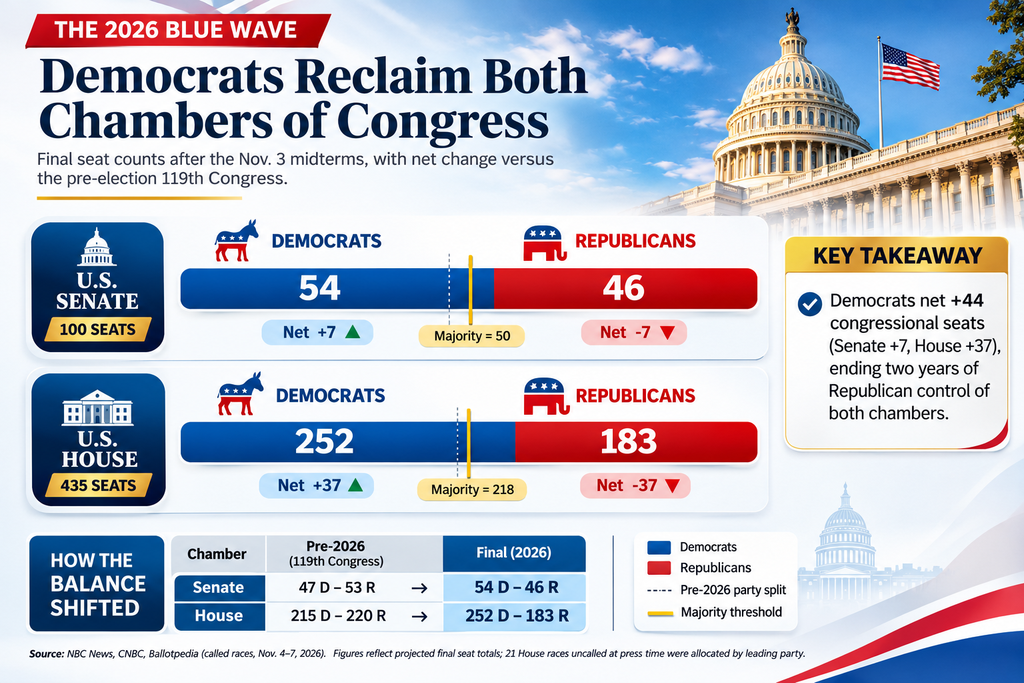
AGOA and the Fight for Economic Certainty
The most tangible arena where congressional power will intersect with African economic fortunes is the African Growth and Opportunity Act (AGOA). The framework, which provides duty-free access to the U.S. market for eligible sub-Saharan exports, has been the bedrock of U.S.-Africa trade relations since its enactment in 2000 . However, under executive discretion, several partner nations have faced unilateral tariff threats, trade status reviews, and arbitrary exclusions. The administration had signaled plans to remove South Africa and Rwanda from the program, a move that South African President Cyril Ramaphosa acknowledged as a “negative” for his country even as he vowed to pursue diversification .
Democratic congressional leaders have signaled an intent to provide long-term stability to AGOA, offering predictable, duty-free market access while creating structured oversight over arbitrary exclusions . This is not a partisan favor to Africa; it is a recognition that trade predictability serves American commercial interests as well. The uncertainty surrounding AGOA’s reauthorization has already prompted African governments to accelerate their search for alternative markets and partners, a trend that undermines long-term U.S. economic influence on the continent . By anchoring AGOA in legislative stability rather than executive whim, Congress can begin to rebuild the trust necessary for genuine commercial partnership.
Beyond AGOA, a Democratic Congress is positioned to re-fund and empower the U.S. International Development Finance Corporation (DFC), opening pathways for American capital investment in green energy transitions, digital infrastructure, and processing capacity for critical minerals across regional hubs like Kenya, Ghana, Zambia, and South Africa. This approach contrasts sharply with the administration’s tendency to view African engagement through a purely competitive security lens—a framing that African leaders have increasingly rejected in favor of partnerships that advance their own development priorities .
The Limits of the Blue Wave
Yet the analysis must resist the temptation of triumphalism. Democratic control of Congress is not an automatic cure-all for the structural challenges facing U.S.-Africa relations. President Trump retains executive veto power and direct oversight of the executive branch; passing sweeping statutory mandates will require either bipartisan negotiation or veto-proof majorities that Democrats do not possess .
Furthermore, core geopolitical priorities such as strategic industrial competition, critical mineral security, and counterterrorism, will remain central bipartisan features of U.S. strategy toward Africa regardless of party control. The progressive wing of the Democratic Party may favor a more conciliatory approach on development and humanitarian issues, but moderate Democrats are not necessarily inclined to fundamentally reorient national security priorities .
The true significance of the midterms, therefore, lies not in the promise of a radical shift, but in the return of balance. By placing checks on executive overreach, restoring diplomatic oversight, and protecting key development channels, the new Congress creates a structured foundation to rebuild a stable, predictable, and mutually beneficial U.S.-Africa partnership. For a continent that has learned to hedge its bets and diversify its partnerships, including overtures to the East—a “multi-alignment” strategy that reflects both opportunity and disillusionment—the American system’s capacity for self-correction is itself a signal worth watching .
The Democratic wave does not guarantee that Washington will suddenly prioritize Africa. But it does ensure that the continent will no longer be subject to the whims of a single executive’s transactional impulses. In the complex geometry of American power, that check—unglamorous, institutional, and procedural—may prove to be the most valuable development for U.S.-Africa relations in years. The question now is whether African capitals and American legislators can seize the opening before the next political tide turns.0°
That was your last free article this month
Keep reading Viewpoints
Your free articles reset on 1 December. Members read without limits, from KSh 499 a month.
