
Notable Progress In Putting A Decent Roof Above Kenyan Families
The state’s ambitious affordable housing project under the Big Four agenda is on course to empower Kenyans to acquire decent homes
They come from every nook and cranny of the country in pursuit of their varied dreams in what some call Kiamatawa, or the city of the big lights. Bursting with energy, the youth particularly, the youthful hunters of opportunity are attracted not just to Nairobi but other big towns as well.
The massive urban migration has put a strain on the nation’s ability to provide adequate housing and many people are forced to live in the informal settlements, which number more than 183 slums according to the Nairobi Slum Inventory that was published by the Pamoja Trust.
Kenya has experienced population explosion in the last two decades, with total population increasing from 23 million in 1989 to 47m in 2019. This growth is exerting pressure on finite resources, particularly arable land as well as on the country’s ability to provide decent social services.
The population explosion, coupled with massive urbanization, has resulted in a housing crisis that has pushed a huge chunk of town dwellers into slums. The ensuing pressure underscores the need for affordable and decent housing for all Kenyans. This is the challenge that the affordable housing pillar of President Uhuru Kenyatta’s Big Four Agenda seeks to address. However, as in everything else in Kenya, corrosive politics has been brought in.
According to the World Bank data, Kenya has a deficit of about two million housing units. While the country has a thriving real estate industry, the target market is rarely the ordinary Kenyan. Prices of the houses in the market are way above the reach of many, and this necessitated the government’s intervention.
The Big Four agenda is encapsulated in four objectives that are measurable—enhancing manufacturing, food security and nutrition, universal health coverage, and affordable housing. Under the housing pillar, the government seeks to provide 500,000 new affordable homes, which will make a huge dent in the housing gap. At the same time, the housing project is expected to create 350,000 jobs and at the same time provide a market for suppliers and manufacturers.
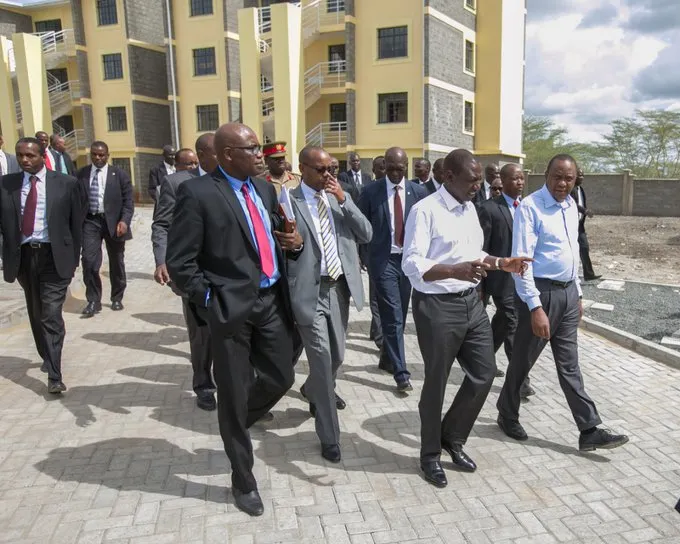
Building half a million affordable houses is no mean feat and the government’s vision has at times been met with cynicism. Yet, the President has time and again reiterated the government’s commitment to achieving this goal. Indeed, a Chinese contractor in January handed over some 228 housing units under the programme ready for occupancy to the government. To expedite the housing programme, the government has partnered with private real estate firms for what really matters is that houses be built, not that they be built by the government.
Whether the programme will be implemented on the scale initially envisioned is a matter of conjecture, but Treasury Cabinet Secretary Ukur Yatani announced the government’s intention to carry on with the Big Four agenda in 2020/21 financial year.
However, it is feared that the reduction, as a result of economic slowdown and the Covid-19 pandemic, in the 2020/21 budgetary allocation towards the projects might slow the pace. The reduction has been significant – from Sh450.9 billion in 2019/20 to Sh128 billion for the current financial year.
With so many balls in the air (the government trying to balance development, cushioning the economy, and combat the pandemic), it is almost inevitable that major government projects may suffer as more focus is given to keeping the economy afloat.
Even in the United States, for instance, the Federal Reserve has had to use its nearly unlimited power in cash generation to keep the economy afloat as the US tumbles headlong into a coronavirus recession. The Fed has had to put in place measures to ensure financial markets continue functioning as Covid-19 ravages the superpower.
The pandemic’s effect on the US economy has been so devastating that the Congressional Budget Office warned that the country’s economic output could reduce by 3 percent between this year and 2030, which translates into a $7.9 trillion loss. This is in spite of trillions of dollars having already been pumped into the ailing American economy. It is during this period that the US has seen its highest unemployment levels since the Great Depression of the 1930s, with over 40 million Americans out of work.
Here in Kenya, the government in July started a phased reopening of the country, with international flights resuming on August 1 and domestic flights on July 15. The government also lifted internal travel restrictions. But acknowledging that Covid-19 remains a big threat, the government did not lift the nationwide dusk-to-dawn curfew. The phased reopening (which is still on-going) was in response to an outcry that the country’s economy needed a drastic kick-start after months of slowdown. The National Treasury has projected that economic growth will slow down to 2.5 percent this year, a stark contrast to last year’s 5.4 percent growth rate.
Yet amid all these disruptions, the government continues with its promise to provide affordable housing for Kenyans. During budget presentation in June, Treasury Cabinet Secretary Ukur Yatani said the two-year old Kenya Mortgage Refinance Company (KMRC) would help maintain adequate liquidity among primary housing mortgage providers to ensure Kenyans from all walks of life can access financing to acquire affordable, decent houses. He added that the agency would also help prevent a potential credit crunch that would end up hurting lower income.
To make this a reality, Kenyans who earn a monthly income of Sh150, 000 and below will from September start receiving home loans from local banks and saccos at the subsidized annual interest rate of 7 percent. This is nearly half the current interest rates in the market—42 percent cheaper than the average market rate of 11.95 percent.
It is worth noting that KMRC is a Treasury-backed lender, which provides financing to banks and saccos, which subsequently lend onward to households. It was set up to facilitate the implementation of the affordable housing programme. The idea behind it is to enhance availability and affordability of mortgage to Kenyans and increase the number of qualifying borrowers. This would ultimately influence the expansion of the primary mortgage and home ownership in the country.
Earlier in August, KMRC indicated it had mobilized close to Sh40 billion, including Sh2.2 billion in equity capital, Sh25 billion commitment by the World Bank and Sh10 billion from the African Development Bank. The institution also intends to raise Sh5 billion from the capital markets to fast track the initiative.
The noble idea to set up the KMRC will be a shot in the arm for Kenyans who have in the past shied away from mortgages that they dimmed to be too expensive. Most mortgage companies in the country also tend to steer clear of housing loans, mainly due to lack of “long” (otherwise know as “time”) deposits in the industry to match those loans. The KMRC solves this problem by providing lending institutions with long-term funding.
In 2018, commercial banks had 26,504 mortgage accounts, worth a total of Sh224.8 billion. This is puny number compared to the total population of 47 million. It is expected that the KMRC funding will cause a significant rise in the number of mortgage accounts in the country, and possibly increase the mortgages to around 60,000 accounts by 2022.
Meanwhile, players in the real estate industry have complained that high cost of energy and heavy taxation are derailing their effort to support the affordable housing agenda. The manufacturers involved in supplying material observed that locally manufactured material are costlier than imported ones, owing to high production cost.
Apparently, the building, mining, and construction sectors consume about half of Kenya’s total energy from the national grid. The high cost of electricity makes finished products less competitive compared to imports. Furthermore, high taxations on inputs contribute to the high cost of the final product. To remedy this, the government should come up with protocols and guidelines to facilitate the implementation of “Buy Kenya Build Kenya” initiative in order for affordable housing target to be achieved.
Being one of the Big Four agenda pillars, manufacturing is central to the other three as it provides required material, including for housing. There is an opportunity for the government to kill two birds with one stone: support the local manufacturers in the construction sector so as to achieve the affordable housing goal.
By creating a strong local supply chain and a stable source of demand, the government can encourage growth in the manufacturing sector while also reducing the cost of input material for the housing programme.0°
