
Behold The ‘God-fearing’ Leader Waving The Holy Book At You
Kenya has witnessed the rise of sleek politicians who masquerade as religious zealots on steroids
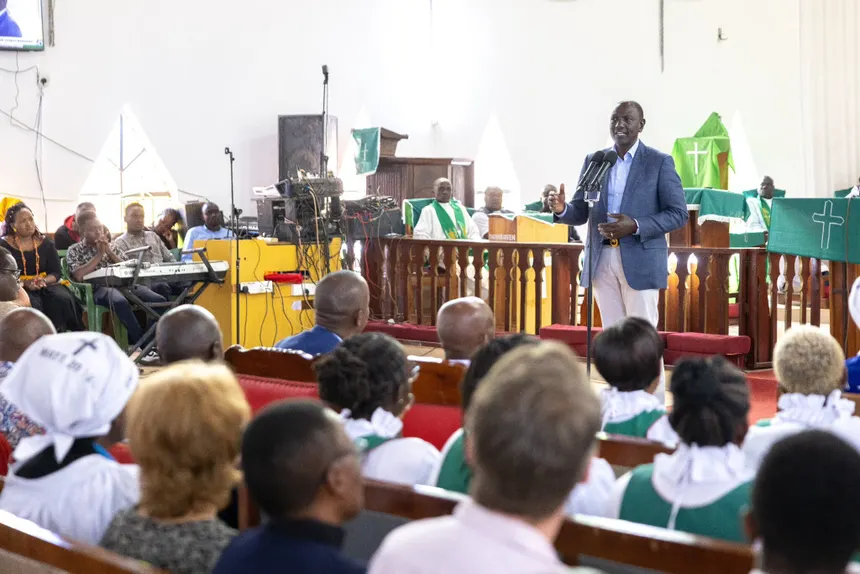
Kenya has had a long history with Bible-clutching, “God-fearing” leader surrounded by barely literate and hate-filled politicians who always felt owed by society, and who left behind a trail of pain, deaths, disappearances, unwanted monuments and economic collapse.
Prominent examples easily come to mind: Former Nakuru District KANU chairman Wilson Leitich, once called for the chopping off of fingers of people flashing the two-finger salute associated by the multi-party activists, while Peter Okondo, another KANU stalwart, had warned that Anglican Bishop Alexander Muge would “see fire and may not leave alive” if he dared set foot in Busia, only for the Bishop to die in an accident 10 days after the warning.
Then there was Kariuki Chotara, the illiterate Nakuru man with colourful Mau Mau history whose meteoric rise to prominence has been traced to a determination by the then new Nyayo regime to contain established members of the Kikuyu business community soon after the founding President Jomo Kenyatta’s death. He is believed to have been heavily funded to build support in Nakuru, complete with a dreaded youth wing. He, too, was an insider around the God-fearing leader. The list is long, and includes the likes of Okiki Amayo, Ezekiel Bargentuny, Mulu Mutisya, Eric Bomet, Nahashon Njiru, and Sheriff Nassir, to mention but a few.
I got thinking about the “God-fearing” leader and his team recently, when ODM leader Raila Odinga left the country for treatment abroad. Now, there are things Raila will never allow you to touch or do even to his worst of political opponents. Such would include, but are by no means limited to, the opponent’s health, family and pecuniary status. Even past transgressions of the said opponent become no-go zones when the rival is caught up in struggles of a personal nature. It is a “weakness” his supporters have agreed to accept; that you don’t shoot an opponent in the back. I have lately learnt that former US President Ronald Reagan had a similar “weakness”—he is remembered to have constantly reminded his staff; “we have no enemies, only opponents.”
It therefore came as a shock recently when the people around Deputy President William Ruto went short of celebrating Raila Odinga’s hospitalization in Dubai. Raila, supposedly the last obstacle to a Ruto presidency, was out the way, according to this group. The celebrations started even before Raila landed in his destination, despite the fact that he could actually have stayed in the country without anybody finding out that he was unwell. But the “God-fearing” leader’s team could not wait.
In that single incident that continued for the whole period that Raila was away, the citizens witnessed what should be cause for worry; the early signs of a combination of ignorance, demagoguery, vindictiveness, anger and entitlement being displayed by a would-be inner circle in a Tangatanga administration. To be fair to him, the DP did not publicly celebrate but his political friends did. Unfortunately, nobody in that side of politics appeared eager to stop the partying.
What is interesting about previous politicians who wielded raw power around the then new “God-fearing” president with catastrophic consequences was that they were mostly barely educated people propped up single-handedly by then new regime through Harambees and slush funds as well as the use of State power to bring down those who derived political and economic power from their education, ideology and business prowess. These power men were mostly broken, bitter and unhappy men who nursed a deep feeling that society had somehow wronged and unfairly treated them right from birth. They saw their changed fortunes as their turn to exact revenge on society at large.
The politicians were grossly wanting in compassion, empathy, responsibility, honesty, and temperament for leadership. None of them appeared to believe in justice, fairness or human rights. Many times, they not only nursed their grievances, but also acted on them by exacting revenge on real and imagined enemies and dissidents. From their vantage position in the kitchen cabinet of the “God-fearing” leader, they took pride in watching their opponents suffer. In between, they presented themselves as merciful, caring, generous and forgiving than the predecessors. In the end, even the educated and the monied business elite had to join the team in a game of survival. This history would not be so important if it remained just history. Unfortunately, it has not.
The calibre of politicians who propped up a ruthless political regime that took the country to an all-time low are gathering again around a “God-fearing” leader, thereby reviving prospects for the return of the dark days of big-man rule. The prospect of some of these demagogues, who subscribe to no known ideology on national issues, forming the inner circle of a Commander-in-Chief should worry Kenyans.
Evidence abounds that the team around the “God-fearing” Deputy President have chosen conspiracy theories as their path to power. In the process, reality and “facts” depend on what suits their needs at the specific moment. Called to account, they resort to conspiracy theories: the children of the rich don’t want the children of the poor to become wealthy; the dynasties want to lock out hustlers in the running of the state; the unsaved are fighting the anointed and the saved; and that the people who rode on DP’s super popularity now want to shortchange him. The list of complaints is endless. In 2008, Joe Biden noted: “Remember, no one decides who they are going to vote for based on the vice president.” But it doesn’t matter. It must be another conspiracy.
The more worrying element of the DP’s team is not just the conspiracy theories, but the cruelty attached to them. So-and-so is dying, only the DP is not; so and so is a drunkard, and the DP is not; so-and-so collected money from DP, only the DP is rich and generous. The DP’s team is not content by merely fighting his real and imagined opponents. They derive pleasure in inflicting pain on them, their families and their supporters. Which raises the issue of what the cabal would do if they found themselves in power.
They seem to perceive everything in terms of what it means to his burning desire to be the President. It is a title they believe President Uhuru Kenyatta, Raila Odinga and all Kenyans owe him.
That is why the DP’s team view the closure of churches and partial lockdown to tame the spread of COVID-19, the 2018 Handshake, the Building Bridges Initiative and war on corruption not as tools for national development, but as political barriers on the path of their leader who appears to be so contemptuous of anti-COVID19 measures that many are the times when he meets huge delegations in this various residences and does not wear a mask. According to this group, their leader is blameless, just like he is invincible and sober. Isolated by the President for disagreements on how to spend the second term, including whether they should prioritize succession politics or the president’s legacy, which obviously would in turn give his DP a good platform for 2022 race, the team gives Kenyans a stark choice – his way or the highway.
Instead, they are talking of their “king” being treated worse than Moi in the succession drama when he should have been treated like a king because he supposedly singlehandedly made Uhuru the President and has been very generous to Churches in Mt. Kenya region. In referring to Moi and Kenyatta succession, they are referring to the doomed effort by the likes of Kihika Kimani in the 1970s to stop Moi from succeeding Kenyatta. But the team fails to see themselves as the new Kihika Kimanis walking the halls of its offices and plotting against others.
They will not be drawn into discussing what the DP’s intentions were when he ensured his associates took over the leadership of all key parliamentary committees against the President’s men. That is not conspiracy on their part and they, therefore, reserve the greatest pity for themselves and their leader, who is supposedly being plotted against yet he is flawless and “God-fearing.”
While Uhuru, a two-term president, admits the nation had been too divided to stand – economy too robbed to grow, too preoccupied with elections to stabilize – the team around the Deputy President spends their days crafting culture wars and creating more divisions: Christians against Muslims, Catholics against Protestants, the poor against the rich, old political families against the emerging ones, frontrunners against others, “pagans” against the saved, the generous against the mean, and drunkards against teetotalers—all ending in insults and murk.
This country deserves leaders with decency, grace, optimism and charitable view of opponents, not the whining, angry and self-pitying lot with the Bible in hand. The signs are all over for those who witnessed the reign of the likes of Chotara, Kihika, Leitich, Okondo, James Njiru, Oloo Aringo, Okiki Amayo to warn those who did not or who have forgotten, that it all started in the same way it is starting now.
The writer is a veteran journalist and communication advisor to Hon. Raila Odinga0°
