
It Is A Poor Myth That Kenyans Are Exempted From Media Effects And Bad Politics
When the airwaves fall silent and politics degenerates into dynamic brinkmanship, a nation discovers how quickly institutional bedrock can turn to quicksand.
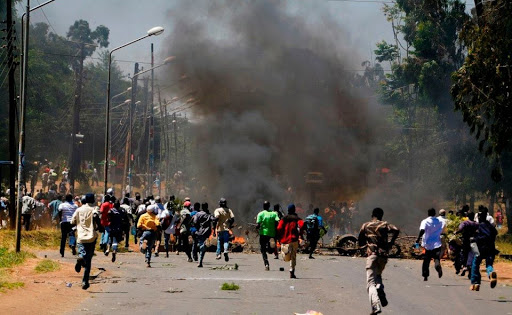
For decades, Kenya wrapped itself in the comforting blanket of its own exceptionalism. Surrounded by historical epicenters of conflict such as the post-colonial ruptures of the African Great Lakes to the protracted fragility of the Horn of Africa, Kenya, the East African anchor took pride in viewing itself as an island of democratic resilience.
Where neighbors weathered military coups, constitutional overhauls under gunfire, or total institutional collapses, Kenya brandished its bustling capital, its lively press, and its vibrant civil society as definitive proof that it was made of sturdier stuff.
Yet history is an unforgiving teacher, and national destiny is never guaranteed. The persistent belief that Kenya is immune to catastrophic political breakdown is not merely a harmless exercise in civic pride; it is a dangerous delusion. A sober look at the country’s recent political trajectory reveals a chilling reality: when elite politics loses its maturity and institutions are treated as transactional battlegrounds, even the most revered democratic bastions can erode with terrifying speed.
Consider the fragile state of free expression and democratic oversight. Nothing highlights the vulnerability of Kenya’s institutional guardrails quite like the state’s recurring impulse to silence the press when the political temperature rises.
On January 30, 2018, the government executed one of the most audacious assaults on media freedom in the country’s modern history. Following opposition leader Raila Odinga’s symbolic “swearing-in” ceremony at Uhuru Park, the Communications Authority of Kenya abruptly pulled the switch on the country’s leading independent television stations. For seven harrowing days, broadcast signals for Citizen TV, NTV, KTN News, and Inooro TV went dark.
The blackout persisted even after the High Court issued explicit conservatory orders directing the immediate restoration of the signals. Reporters Without Borders condemned the suspension as a violation of the right to inform, noting that President Uhuru Kenyatta had summoned media representatives just four days earlier and threatened to withdraw their licenses if they provided live coverage of the event . The New York Times reported that the government dismantled transmission equipment and that the partial restoration of signals days later came only after another petition was filed seeking to hold the interior secretary in contempt for defying the court .
That week of deliberate silence sent a seismic shockwave through the body politic. It demonstrated that under sufficient political strain, executive power could bypass constitutional guarantees with total impunity.
Nor was that 2018 darkness an isolated anomaly. The regulatory levers have been weaponized repeatedly. During the widespread civil unrest and youth-led protests of June 2024, the Communications Authority ordered major outlets, including Citizen TV, KTN, NTV, and K24, to halt live coverage of demonstrations, citing national security and public order .
The directive was rescinded a day later after the Katiba Institute and the Law Society of Kenya filed petitions at the High Court, with Justice Chacha Mwita ruling that the directive raised significant constitutional concerns regarding media freedom and public access to information .
Yet the pattern is unmistakable: when state apparatuses can arbitrarily sever the public’s access to real-time information, the democratic threshold between a constitutional republic and an authoritarian regime becomes paper-thin.
The illusion that Kenya is fundamentally “different” from its neighbors masks a deeper structural hubris. Nations do not plunge into chaos overnight because of some sudden, unpredictable curse; they slide into it incrementally, fueled by political brinkmanship, reckless ethnic mobilization, and systemic contempt for the rule of law.
The tragic lessons of sub-Saharan Africa’s political history are written in clear, unambiguous terms. The rapid breakdown of state institutions in Sudan demonstrated how quickly decades of economic and social progress can vanish when armed elites prioritize self-preservation over the national interest. The devastating descent of Rwanda in 1994 served as a tragic reminder of what happens when political rhetoric systematically dehumanizes opponents and weaponizes ethnic fault lines. The prolonged instability in Somalia and South Sudan showed that once the constitutional social contract is broken, restoring basic order can take generations.
Kenya carries every single one of these structural vulnerabilities. Its political parties remain largely empty ideology-free vessels built around dominant personalities and regional ethnic coalitions rather than competing policy visions. Elections are routinely framed as zero-sum existential battles for resource distribution. When state power is viewed as the ultimate prize for ethnic survival, political maturity evaporates, replaced by reckless brinkmanship that tests the nation’s seams to their limit.
We have seen the warning signs before. The post-election violence of 2007–2008 brought Kenya to the very brink of state failure, demonstrating with horrific clarity how fast neighbor can turn on neighbor when electoral integrity collapses. A United Nations fact-finding mission documented more than 1,200 killed, thousands injured, over 300,000 displaced, and widespread sexual violence, while noting that impunity for past abuses had been a major contributing factor to the eruption .
The structural issues that fed that crisis, including land grievances, youth unemployment, corruption, and political exclusion, remain largely unresolved beneath a veneer of modern infrastructure and economic ambition. The intervening years have seen accountability for that violence remain elusive, a failure that sends its own message about the durability of the social contract.
To survive, Kenya must abandon the complacency of perceived exceptionalism. A nation’s stability is not sustained by grand buildings, tech hubs, or economic rankings; it is anchored in the integrity of its public institutions, its commitment to the rule of law, and the willingness of its political class to act with restraint.
The media landscape itself offers a cautionary tale: much of Kenya’s press is owned by political leaders or figures close to the government, a structural vulnerability that breeds self-censorship even when the law on paper guarantees freedom .
When political leaders view public trust as disposable and treat constitutional mandates as mere suggestions, they invite the very chaos they claim to guard against. If the airwaves can be silenced at the whim of the executive, if judicial rulings are ignored with impunity, and if politics continues to be conducted as a high-stakes winner-take-all gamble, Kenya risks learning the hardest lesson of all: that it was never special, only fortunate—and that its fortune can run out just as fast as anyone else’s.0°
Read the full text: The Constitution of Kenya, 2010 (PDF, free)
