
Africa And The UN: The Whimpering Whisper That Is The African Voice
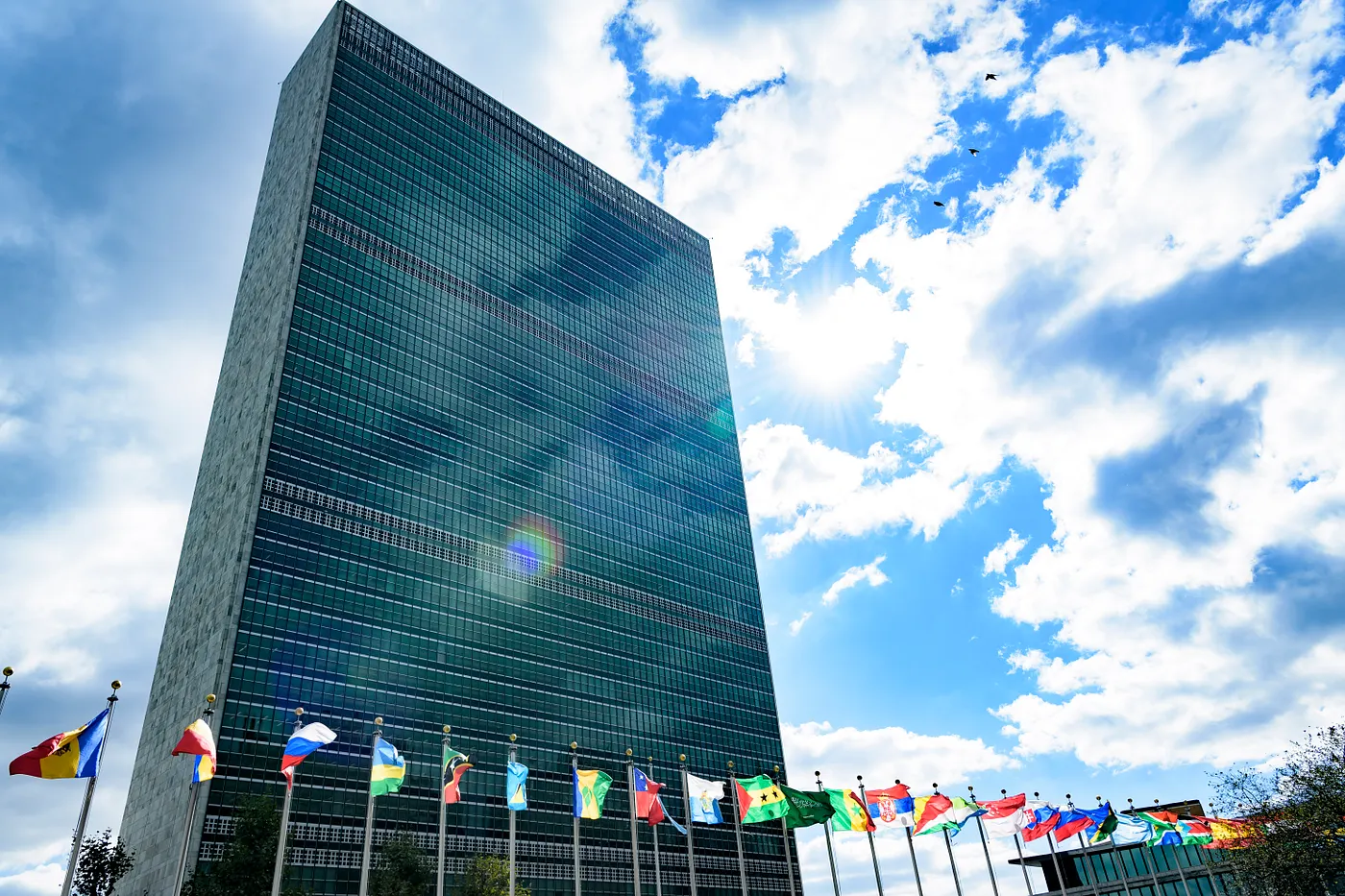
Asthe United Nations approaches its eighth decade, a profound paradox defines our multilateral age: the continent that contributes the largest number of UN member states and its peacekeepers remains conspicuously sidelined from its most powerful organ — the UN Security Council.
The 54 flags of Africa flying outside the UN headquarters in Manhattan are a vivid testament to the continent’s formal membership. However, inside the Security Council chamber, Africa’s collective voice often amounts to a whimpering whisper.
With no permanent seats and no veto power, African nations are frequently relegated to the sidelines of decisions that directly shape their destinies, including those bearing on global peace. This paradox, a region so central to UN operations being so peripheral to its power, reveals the enduring chasm between the rhetoric of global equality and the entrenched realities of influence.
As world leaders convene, this imbalance has never looked more anachronistic and unfair. Africa supplies over 40 percent of UN peacekeepers, the largest contingent from any region. Given that peacekeeping is not risk-free, African soldiers essentially serve as sepoys for the big nations.
At the same time, African governments passionately champion the Sustainable Development Goals (SGRs),whose provenance most Africans do not know, but which African states supported due to existential urgency, novelty, and a propaganda-induced herd-mentality that ostracises any state going against the grain. Yet the real seat of influence, the Security Council’s permanent membership, remains frozen in institutional amber, a vestige of the 1945 global order.
The Promise Fulfilled — and Unfulfilled
The UN’s footprint across Africa underscores both its profound potential and its frustrating limitations. From solar kitchens in Angola to cold-storage platforms improving food security in Chad, UN field efforts often demonstrate practical, creative problem-solving at its best.
More broadly, UN agencies have been pivotal in re-ordering women’s equality after missionaries disrupted traditional African gender balance by introducing inequalities couched in prudish observances.
The UN has also advanced human rights, including healthcare expansions aligned with the visions of each state andAfrica’s own continent-wide Agenda 2063.
Yet, these aggregate gains obscure a stark unevenness. For instance, meaningful, empowering, affordable, practical, technology-oriented education has remained underfunded.
At the same time, benefits often skew toward more stable states, while in fragile environments like the Democratic Republic of the Congo and Somalia, tangible progress remains elusive. There, institutional frailty and persistent insecurity are the excuses that are continually given as the hinderances to the UN’s capacity to deliver sustained transformation.
This uneven impact stems from enduring structural injustices. The Security Council is anchored in a 1945 configuration: five permanent powers, three of them from the conceptual West, and none from Africa, the world’s richest continent that is poised to house a quarter of the world’s population by mid-century. During crises — from the Rwandan genocide, to imbroglios in the DRC and Somalia to the Sahel’s escalating turmoil — the Council’s paralysis, rooted in geopolitical rivalries and veto dynamics, has repeatedly delayed critical humanitarian responses and peacekeeping interventions.
The peacekeeping paradox illustrates this tension perfectly. While African troops form the backbone of missions on their own continent, these same missions sometimes face damning criticism, with the UN’s own Office of Internal Oversight Services, leading such criticism, citing failures to protect civilians and instances of sexual exploitation allegedly by the peacekeepers. Ultimately, the criticism, whether deserved or not, has the effect of eroding the legitimacy of Africa’s contribution to global peace.
A Chorus for Change
The call for the reform of the UN system is a consistent and powerful chorus, and it has been led by some of Africa’s most prominent leaders.
Nelson Mandela used his platform as a symbol of liberation to advocate for a more equitable global order. In his address to the United Nations General Assembly on October 3, 1994, he saw UN reform as an extension of the struggle for justice. “The challenge posed by the next 50 years of the Universal Declaration of Human Rights… consists in whether humanity… will have the courage to ensure that, at last, we build a human world,” he stated.
Robert Mugabe, the former president of Zimbabwe, was a fiery critic of the UN’s structure, particularly the veto power. On September 29, 2015, in his address to the UN General Assembly, he expressed his disappointment with the lack of progress on reform, stating: “We are disappointed that we have lost the opportunity of this anniversary [of the United Nations] to address this burning issue of the reform of the UN Security Council in a manner that satisfies the just demands and expectations of the majority of us1.”
In recent years, Kenyan President William Ruto has been a vocal advocate for a reformed UN. In his address to the UN General Assembly in New York on September 21, 2023, Ruto made a pointed criticism of the international security architecture: “If any confirmation was ever needed that the United Nations Security Council is dysfunctional, undemocratic, non-inclusive, un-representative and therefore incapable of delivering meaningful progress in our world as presently constituted, the rampant impunity of its actors on the global scene settles the matter.” He reiterated this stance a year later, calling the Council “unacceptable” for excluding 54 African countries.
These calls are not isolated. They represent a united front among African leaders. President Lazarus McCarthy Chakwera of Malawi addressed the General Assembly on September 26, 2024, demanding: “One fix that we from Africa demand is for the United Nations to embrace democracy in the Security Council by giving Africa two permanent seats with veto power.”
South African President Cyril Ramaphosa, speaking at the General Assembly on September 19, 2023, also highlighted the need for a more inclusive and democratic UN.
Other African leaders have equally called for reforms but the calls are yet to yield any tangible results.
Beyond security governance, Africa is proactively reshaping its prospects through economic integration under the African Continental Free Trade Area (AfCFTA) and is making feeble effort to push for comprehensive debt relief. It has also caught on to the fad of strengthening its advocacy for climate finance.
The Unfinished Promise
As African leaders head to the General Assembly later this month, they confront a pivotal strategic question: continue pressing for reform from within an often-inert and unresponsive system, or accelerate the building of parallel institutions that better serve continental aspirations?
A continent of over 1.4 billion people — a number set to double by 2050 — cannot remain on the sidelines without jeopardizing the very legitimacy of global governance.
With some powerful UN-founding states walking back on the rule-based international system that they created, Africa is at a loss on whether to continue to support the UN, or wait to see if the UN will finally adapt to reflect the principle of human human equality, today’s demographic and as well as the current geopolitical reality.
Those 54 flags in Manhattan signify African commitments, partnerships, and hopes. But without meaningful structural reform, African states risk becoming mere flower girls at the UN.
The ultimate test is not for Africa to prove its worth to the UN, but for the UN to reconcile its foundational ideals with the demands of a changing world. In embracing a truly global partnership, it may just safeguard its own relevance for the decades to come.0°
