
America’s New National Security Strategy Is A Reckoning For Africa
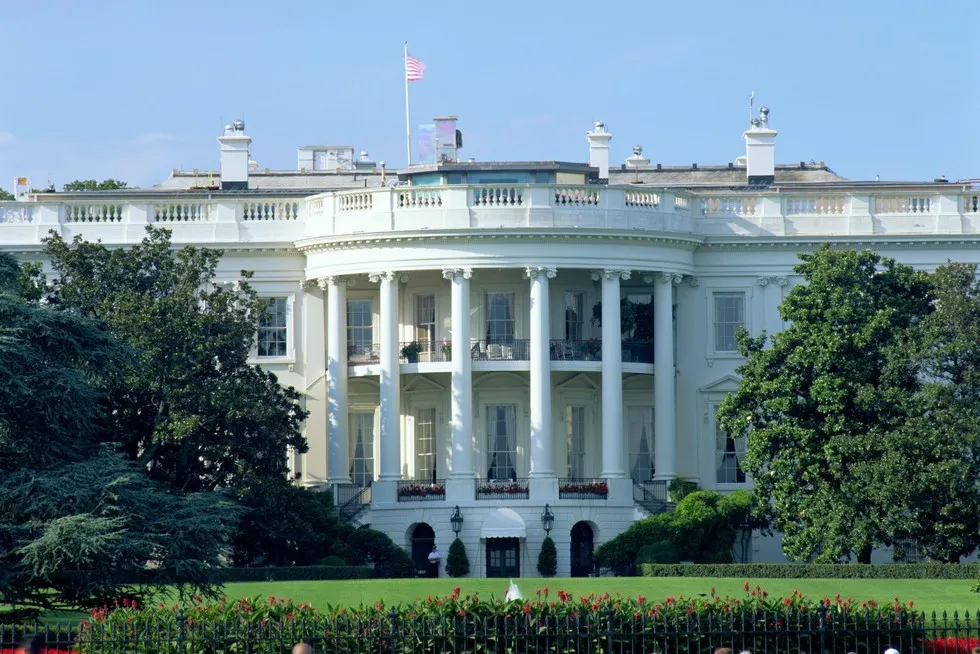
For seventy years, the United States positioned itself as architect of a global order ostensibly built on shared rules, democratic values, and multilateral cooperation. That fiction, however threadbare, at least provided a framework within which weaker nations could appeal to principle.
Then in November 2025, the Trump administration released its National Security Strategy — a document mandated by Congress but shaped entirely by the White House’s national security apparatus. Welcome to the brave new world order!
Unveiled with minimal fanfare compared to previous iterations, this Strategy represents a fundamental break from decades of American foreign policy consensus. It has torn away the veil entirely, exposing the vile calculations that drive national ambitions. In place of the old order now stands a brutally transactional document that abandons even the pretense of partnership in favor of naked self-interest.
White House’s new strategy emphasizes the need to protect American independence and defend the nation from military attacks and foreign manipulation. A key focus is preventing hostile countries from undermining U.S. economic and industrial systems. The document asserts that maintaining national stability depends on prioritizing strong military power (“peace through strength”) and secure borders.
For Africa, a continent holding over 30% of the world’s critical minerals yet grappling with fragile governance and climate shocks, this shift isn’t just concerning. It’s existential.
What strikes me most about this Strategy is its mirror-clear candor. Previous administrations cloaked resource extraction in the language of development assistance and capacity building. This document dispenses with such niceties. The authors openly condemn what they call “hugely misguided and destructive bets on globalism and so-called ‘free trade’ that hollowed out the very middle class.” When the world’s most powerful nation explicitly rejects the rules it once enforced, the default state for resource-rich but power-poor regions becomes vulnerability.
The Predatory Blueprint
Africa merits exactly three paragraphs in this sprawling security document — roughly 1% of its total content. Yet those paragraphs reveal everything. In fact, the brevity with which Africa is treated in the document is inversely proportional to the interest America has on the continent.
The Strategy promises a “transition from aid to trade and investment” focused on “harnessing Africa’s abundant natural resources.” Strip away the diplomatic veneer and what remains is a blueprint for extraction that would make 19th-century colonial powers blush. Trade and investment is code for exploitation with compelled but flourishly signed permission of the weak and unstrategic Africans.
Consider the Democratic Republic of Congo, which supplies 70% of the world’s cobalt, a mineral essential for every electric vehicle battery powering the West’s green transition. In June 2025, President Trump brokered the so-called Washington Accords between Presidents Tshisekedi and Kagame, a ceasefire explicitly tied to securing cobalt access for American manufacturers. Fighting resumed within weeks, displacing another 100,000 people in the eastern provinces. The human cost? Collateral damage in service of a $10 billion mineral pipeline. Similar fighting resumed last despite the highly publicized signing in Washington.
I’ve watched this pattern repeat across the continent. U.S. firms increasingly secure no-bid contracts for critical minerals in arrangements that echo colonial-era concessions. As Congolese analyst Jason Stearns observed in Foreign Affairs, these peace deals brokered abroad systematically ignore the economic interests of African states as well as local grievances, perpetuating cycles of violence for resource grabs. This isn’t partnership. It’s predation dressed as investment.
The Squeeze Play
Nigeria’s recent experience illustrates the coercive logic underlying this new approach. As Africa’s largest economy attempts to diversify trade relationships and reduce dollar dependency, as it attempts to exercise basic economic sovereignty, Washington responded with a drip-feed of threats, including barring Nigerian elites from traveling to the US ostensibly because Christians are being persecuted, tariffs justified by “trade imbalances,” and even military action.
The Strategy makes its intentions plain: “Preserving and growing our dominance entails leveraging our dynamic free market system… to ensure that our markets continue to be the most dynamic, liquid, and secure.” In practice, this means punishing any nation that seeks alternative arrangements.
This is particularly galling given the numbers. Africa’s mineral economy is projected to reach $1.5 trillion by 2030. Local processing of these resources could generate a $24 billion GDP boost according to the Institute for Security Studies, creating the manufacturing jobs our youthful population desperately needs. But if we remain trapped as price-takers for our own raw materials, exporting cobalt and lithium only to import finished batteries and electronics, we merely entrench dependency under a new flag.
The Strategy’s rhetoric about “mutually beneficial trade relationships” rings hollow when examined against the actions of powerful states. U.S. lawmakers threatened South Africa with sanctions in 2024 over its BRICS alignment, pro-Palestinian stance, and refusal to reflexively support American positions on Russia. Some even labeled the nation as “against civilization”, a language that is clearly soaked in the racial condescension that has always lurked beneath professions of partnership. These aren’t the gestures of an equal seeking allies. They’re the ultimatums of a hegemon demanding clients.
Militarization as Control
Perhaps most troubling is the Strategy’s emphasis on military engagement. It calls for “closer collaboration between the U.S. Government and the American private sector” while bolstering AFRICOM operations across the continent. In 2025, AFRICOM launched “Africa Shield,” a counterproliferation workshop ostensibly about security but transparently focused on training forces to “secure supply chains.” This is code for guarding mineral routes.
I find it grimly ironic that weak African militaries, ill-equipped, ill-trained, and often underfunded and politicized, are presented as partners when they function more as vulnerabilities to be exploited for basing rights. U.S.-trained officers have led or participated in multiple Sahelian coups, yet Washington continues these programs because they ensure access, not because they build genuine military capacity.
The Strategy also urges Europe to “prevent immigration” and “arm itself,” effectively linking Africa’s mineral wealth to Fortress Europe’s green transition while urging Europe to bar African immigrants. This is the logic of extraction laid bare: African resources are welcome; Africans are not.
Three Futures, None Good
If this Strategy proceeds unchecked, I see three possible trajectories for Africa, none remotely optimistic.
First, escalating resource wars as the U.S., China, Russia, and Europe openly compete for cobalt, lithium, and rare earths. This will turn Africa into a battlefield and a wasteland. We’ve already seen this dynamic spawn proxy forces from M23 in eastern DRC to ISWAP in northern Nigeria. Governments will fracture; millions will be displaced.
Second, authoritarian ententes where Washington props up “reliable” strongmen who guarantee mineral access regardless of governance quality. We’ve seen this movie before, prime examples being Mobutu, Biya, Bokassa and Mubarak, and know how it ends: hollowed-out institutions, popular resentment, and eventual collapse.
Third, balkanized defiance where BRICS-aligned states like South Africa and Ethiopia successfully diversify their trade while U.S. client states stagnate, shattering the Pan-African unity embodied in the African Union and African Continental Free Trade Area.
A Wake-Up Call
History offers uncomfortable lessons. The 1884 Berlin Conference carved up Africa for extraction, birthing a century of exploitation and strife. Today’s scramble is digital, with drones monitoring mines and algorithms pricing lithium, but the core logic remains unchanged: Exploit, exclude, evade equity.
Yet the Strategy’s very candor presents an opportunity. By shedding the mask of benevolence, Washington has clarified the stakes. In a world without rules, power alone determines outcomes. Africa must respond not with appeals to principle, principles the dominant power has explicitly abandoned, but with power of our own. Africans must learn that their national interest, just like the interest of other states, is protected by might, and above all, strategic thinking. African are called to prove that what is in their head is not porridge.
This means professionalizing our militaries, building our own military-industrial complex, enforcing the AfCFTA, and forging continental unity by first building defensive blocs capable of negotiating as equals. It means learning from BRICS nations that have successfully diversified trade relationships without becoming anyone’s client. It means rejecting the false choice between American extraction and Chinese infrastructure, forging instead a path of genuine sovereignty.
At the 2025 U.S.-Africa Summit, Angolan President Lourenço demanded “ambition over aid,” rejecting the condescending framing that has long characterized these relationships. African Union Chair Mahmoud Ali Youssouf put it more bluntly: “We seek solutions, not sermons.” This posture — demanding parity, not pity — must become our baseline.
The 2025 National Security Strategy is honest about American intentions in ways previous documents never were. The question now is whether Africa will be equally honest with itself about what’s required to survive and thrive in this new dispensation. The mighty will seize; the meek will endure. Which will we choose to be?
The future is not yet written, but the terms are now clear. In a rules-less world, Africa must become rule-makers or remain rule-takers. There is no middle ground left.0°
