
Kenya’s Progressive But Gridlock Constitution At Fifteen
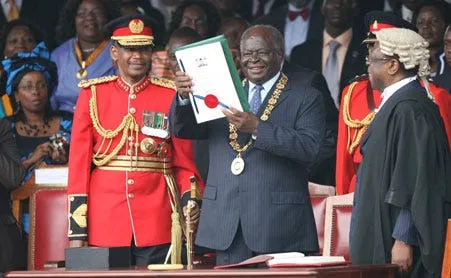
InAugust 27, 2010, the postcolonial Kenya nation finally exhaled as it promulgated a new constitution. Having endured decades of autocratic rule, ethnic violence, and a political system designed to centralize power and privilege, Kenyansoverwhelmingly ratified a new constitution, bringing to an end a 20-year search for a new constitutional order.
The new constitution, which became known as the 2010 Constitution, was hailed as a revolutionary covenant — a visionary charter promising to dismantle the old order. Its ambitions were breathtaking: to devolve power, enshrine a progressive bill of rights, and create a government of robust checks and balances. It was to be the foundation for a new, more equitable Kenya.
The new constitution has been of great benefit to Kenyans. As Kibe Mungai, a prominent lawyer wrote in an article published in The Standard on August 29, 2025, there are many reasons for celebrating the 2010 constitution but three stand out:
“First, the promulgation meant that in one fell swoop, the reign of the previous constitution that had enabled tyranny, oppression and economic subjugation between 1966 and 2002 came to a sudden end. Secondly, the adoption of the new constitution brought to an end the era of the imperial Presidency and the centralized state in which the life and future of our country revolved around a mere mortal who happened to occupy the State House. Thirdly, the new constitution gave Kenyans in their collectivity a golden opportunity to establish a republic which — in the words of Article 4 (2) — would be a multiparty democratic state founded on the national values and principles of governance referred in Article 10.”
Yet fifteen years later, a grand paradox has emerged. The very document designed to foster unity and efficient governance has become a persistent engine of legal wrangling, political impasse, and administrative stalemate. The problem lies not in its aspirations, but in its architecture. Born from necessary compromise and an attempt to be all things to all people, the 2010 Constitution has become what insiders ruefully call a “camel” — a beast burdened by the weight of countless conflicting aspirations, now struggling to cross the desert of Kenyan political reality.
This was, perhaps, inevitable. The constitution was not drafted in a vacuum but hammered out in the crucible of political crisis. The earlier “Wako Draft” of 2005 had been rejected in a divisive referendum, and it was only after the post-election violence of 2007–2008 that the process was rebooted under the stewardship of the Committee of Experts. Their task was to harmonize the failed draft with the more popular “Bomas Draft” while appeasing a fractious political class. The final document was shaped less by a singular vision than by a series of trade-offs, each designed to pacify rival factions.
In Parliament, it was picked apart and reassembled into a text that guaranteed everyone something, and no one everything. Even during the referendum campaign, both supporters and detractors conceded that the document was imperfect, with most agreeing that at least 20 percent of the document was faulty. The “YES” side asked Kenyans to endorse it with the assurance that its flaws could be corrected later. The public, exhausted by two decades of constitutional wrangling, were ready to pass the Russian constitution or any other for that matter, and therefore ratified it with this understanding. Refinement was not a luxury but an obligation deferred.
The contradictions are the price Kenyans pay for not refining the document. Devolution, for instance, was created to decentralize power and bring services closer to the people, but the national government retains the constitutional authority to override county laws whenever there is a conflict. Instead of harmony, the result has been a perpetual tug-of-war between Nairobi and the counties. The careful division of powers between the executive, legislature, and judiciary, meant to create checks and balances, has often produced paralysis. Presidential appointments stall for months awaiting parliamentary approval; judicial independence, jealously guarded on paper, has become a constant battleground in practice. Instead of cooperation, the constitution institutionalized suspicion.
The Bill of Rights, one of the most celebrated in Africa, guarantees access to healthcare, housing, education, and social security. But Article 20(5) inserts an escape clause, noting that these rights are subject to the availability of resources. In practice, this has transformed enforceable rights into aspirational goals, allowed corruption to thrive as the can of obligations is kicked down the road, and leaving citizens in courtrooms arguing for services that the state insists it cannot afford. Nowhere is the tension between promise and reality sharper.
Perhaps the most glaring contradiction lies in the constitution’s treatment of equality. Article 27 proclaims all citizens equal before the law, yet the principle of equal suffrage is conspicuously absent. A vote in one part of the country does not carry the same weight as a vote in another. This inequality has fueled the now familiar rallying cry of “one man, one vote, one shilling,” as regions demand that representation and resources reflect population strength, not kilometers of idle land.
The text deepens the paradox by simultaneously proclaiming individual equality while elevating “communities” as collective bearers of rights. Protecting minorities is undeniably important in a diverse society, but the constitution leaves unresolved the question of whether citizens are to be safeguarded first as individuals or primarily as members of ethnic blocs. In privileging communities, it risks entrenching the very divisions it was meant to transcend. The situation is made worse by drawing county boundaries to coincide with tribal homelands.
Even its progressive promises falter on execution. The gender equity clause, famously mandating that no more than two-thirds of elected or appointed officials be of one gender, has remained a dead letter. Parliament has failed to pass the enabling legislation, and courts, bound by separation of powers, have been unable to compel compliance. The symbolic victory of enshrining gender equality has been undermined by the absence of political will to enforce it. But perhaps most pertinently, questions continue to be raised over whether this gender equity clause can co-exist with the affirmative action representation of women under the special seats of county women representatives.
These contradictions are not academic. They shape daily governance. Kenya has become a litigation nation, where every major policy question — from election rules to budget ceilings — is fought and settled in court. The most ambitious attempt to reform the constitution since 2010, the Building Bridges Initiative (BBI), collapsed in 2021 when the High Court, the Court of Appeal, and ultimately the Supreme Court ruled it unconstitutional.
For supporters, BBI was meant to cure exclusion an eliminate inherent privileges and make all Kenyans equal by expanding executive power-sharing and linking representation more directly to population figures; for opponents, it was a thinly disguised elite pact. Its judicial death, albeit on a technicality that a referendum could not be initiated by a sitting president, underscored both the strength of Kenya’s independent courts and the rigidity of a constitutional order that makes change nearly impossible without triggering another national crisis.
The gridlock was visible again in 2024, when Generation Z protesters poured into the streets to oppose the Finance Bill. They used digital tools to mobilize at a scale never seen before, demanding accountability for punitive taxation and runaway public debt. At the heart of their fury was the sense that the constitutional promise of equitable governance had been betrayed. A government bloated by overlapping institutions and a political class shielded by a combination of impunity and endless strategic lawfare appeared incapable of delivering fairness or relief. The constitution, once imagined as the solution, had become part of the problem, and risked taking the country back to exactly where the Independent constitution had taken it: a constitutional dictatorship.
The multiplicity of institutions, from 47 county governments to two houses of Parliament to an army of commissions, has created a system that is not only unwieldy but exorbitantly costly. The Salaries and Remuneration Commission, meant to keep political paychecks in check, quickly surrendered under political pressure, misinterpreted its role as preventing professionals from being given salaries equal to those enjoyed by politicians, leaving taxpayers to finance an ever-expanding political class. The result is a system that spends more on sustaining itself than on delivering the goods and services it promises.
And yet, it would be a mistake to dismiss the 2010 Constitution as a failure. It was a milestone in Kenya’s democratic journey, the product of long struggle and genuine sacrifice. It has safeguarded freedoms that would once have been unthinkable, broadened civic space, and entrenched the judiciary as a powerful, albeit neurotic, arbiter. But reverence must not mask reality. The compromises of 2010 needed sunset clauses and demand correction. From the unresolved gender rule to the unequal weight of the vote, from devolution’s ambiguities to the contradictions of community versus citizen rights, the constitution has drifted from being a shield of democracy to becoming a cage of stalemate.
Kenya is hardly alone in this dilemma. South Africa’s much-lauded 1996 charter has been tested by state capture and service-delivery crises. Ghana’s 1992 framework, once praised for stability, is today strained by executive dominance. What distinguishes Kenya is that its contradictions were not unintended — they were deliberately embedded as the price of consensus. Fifteen years later, the reckoning is clear: a nation cannot forever defer the hard choice between inclusivity and efficiency, between community and citizen, between symbolism and substance. The next chapter will be defined not by whether Kenya venerates its 2010 Constitution, but by whether it dares, finally, to refine it.0°
